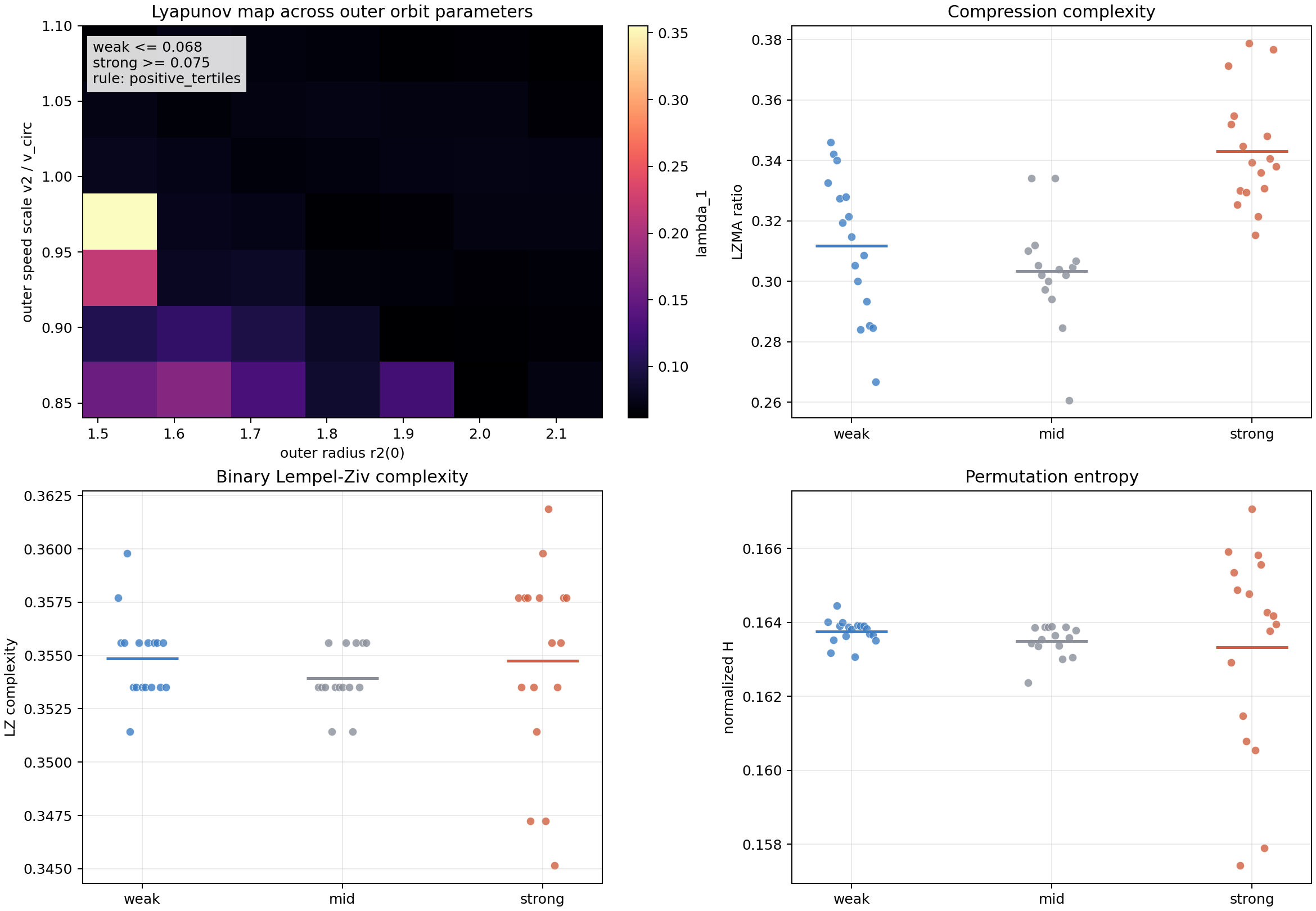
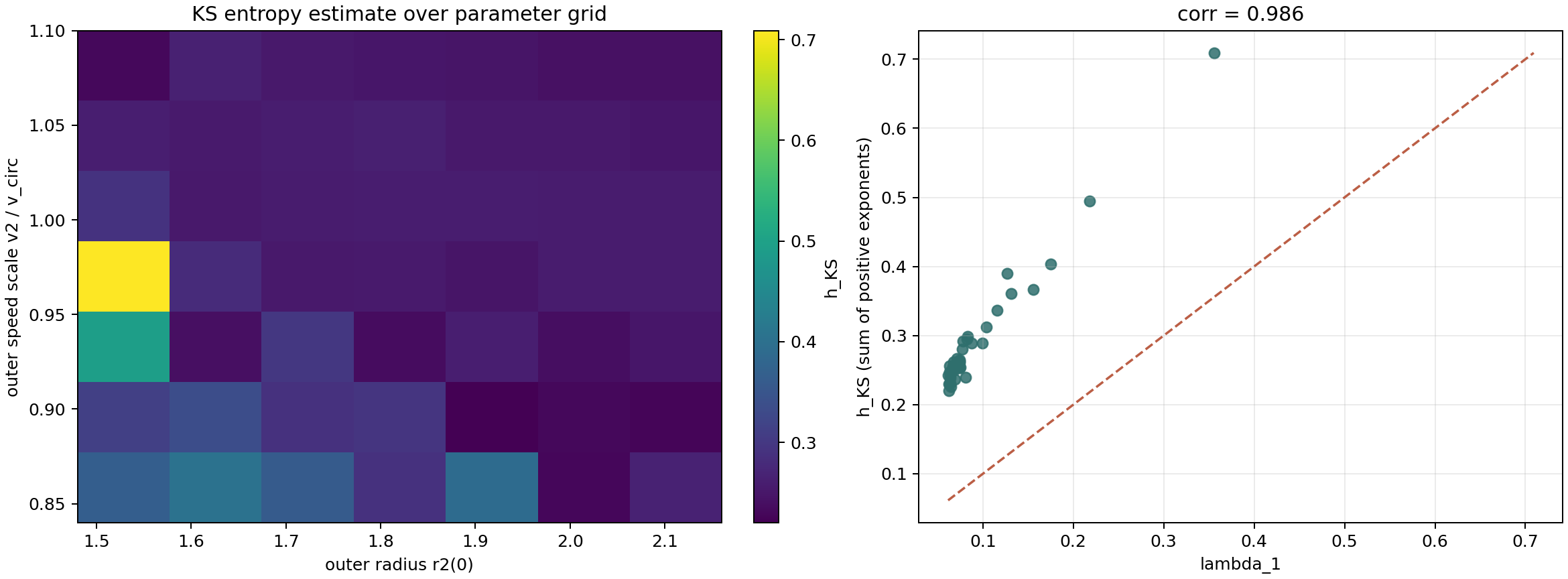
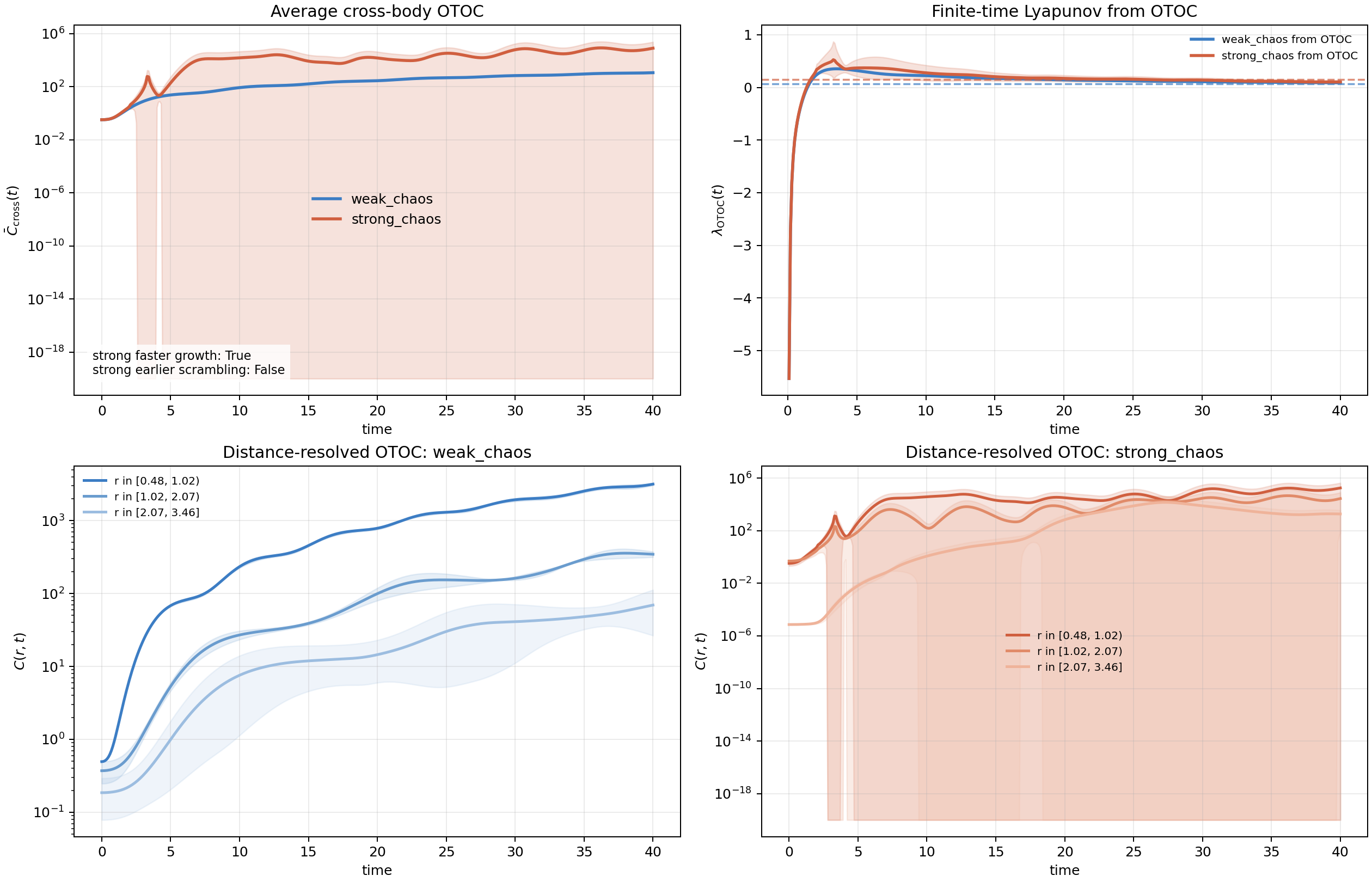
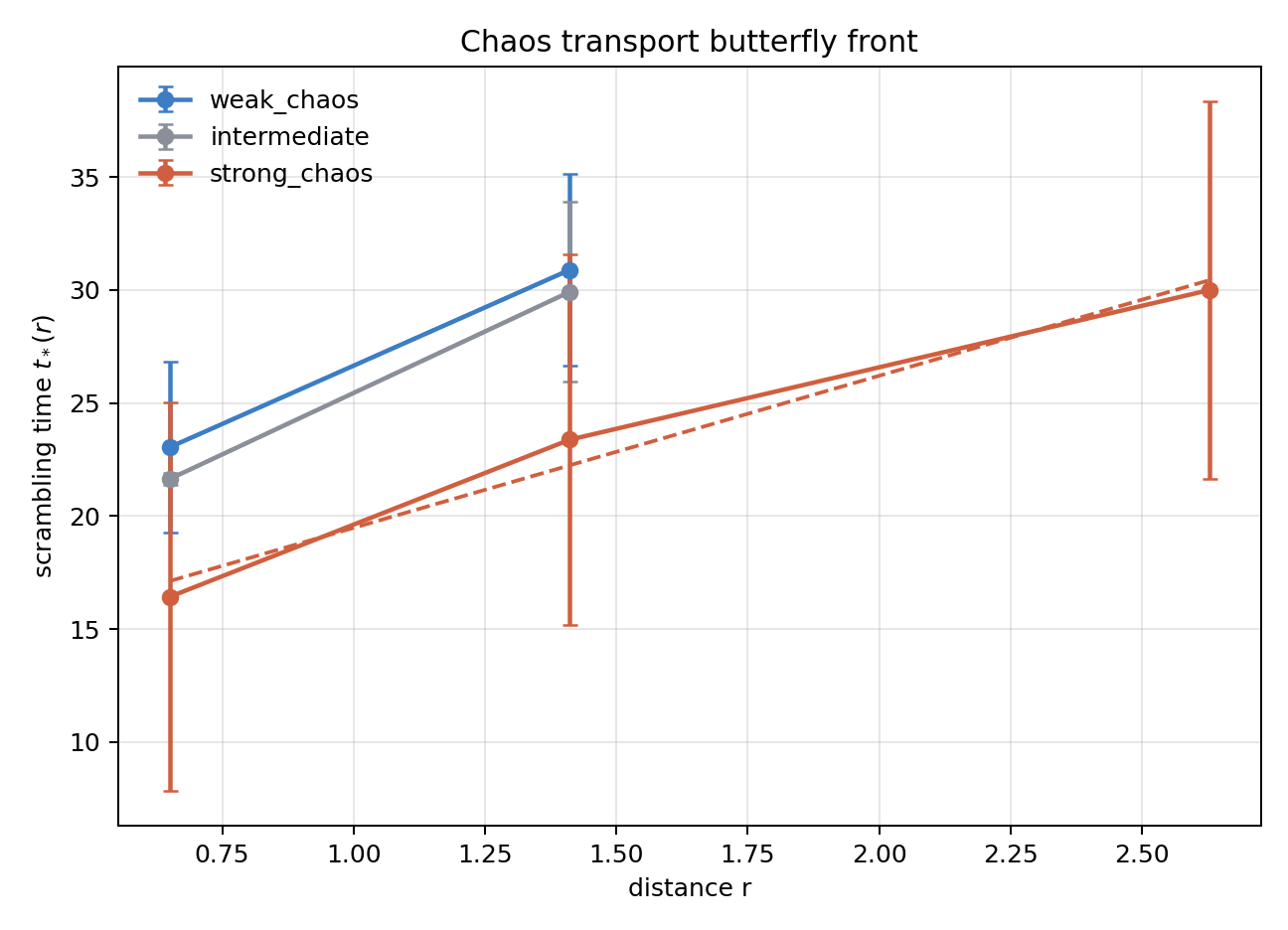
Gravitational Transport Appendix
重力系として読むと、avalanche と transport の意味が少し変わる
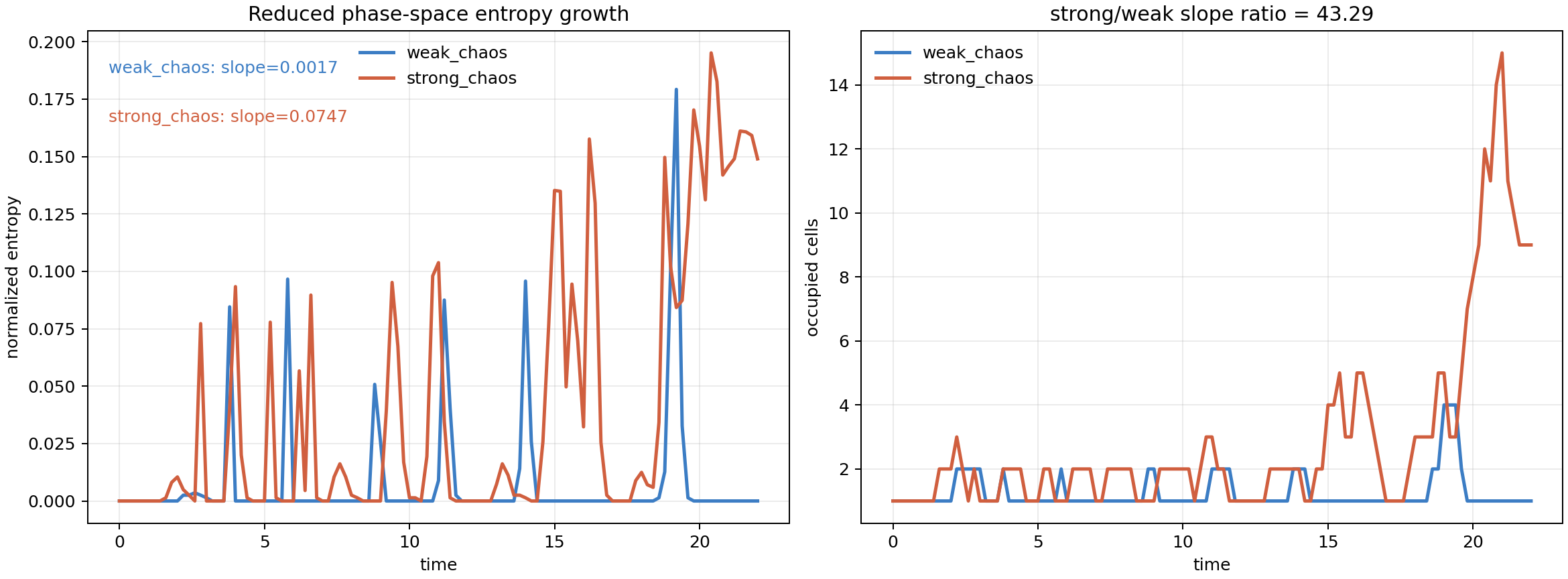
ここからは実験メモの追記に対応する補論です。N 体重力系では local front をそのまま SOC 的に読むより、escape・energy exchange・resonant corridor を含む nonlocal transport として再定義した方が、今回の結果とよく整合します。
01 / Why Gravity Is Different
重力系では local propagation の直観が壊れやすい
- long-range で finite interaction radius を持たない
- non-extensive なので局所 front だけでは輸送を捉えにくい
- escape particle が出ると density support と geometry が時間依存で変わる
したがって、front velocity や cluster geometry は格子系と同じ意味では読めません。bounded phase と escape phase を分けて考える必要があります。
02 / Redefining Activity
何を avalanche seed と呼ぶかを設計し直す
|ΔEi| > θ, |Δri| > θr, |ΔLi| > θL, Ei > 0
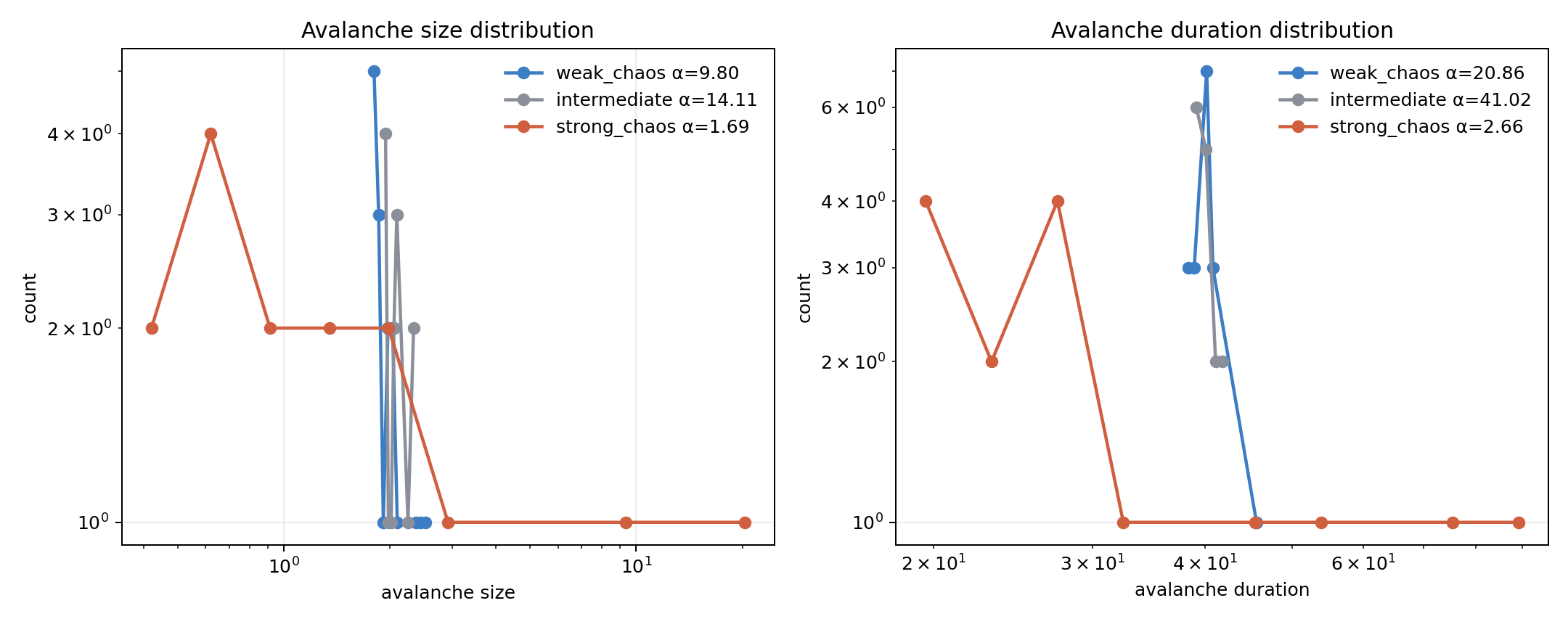
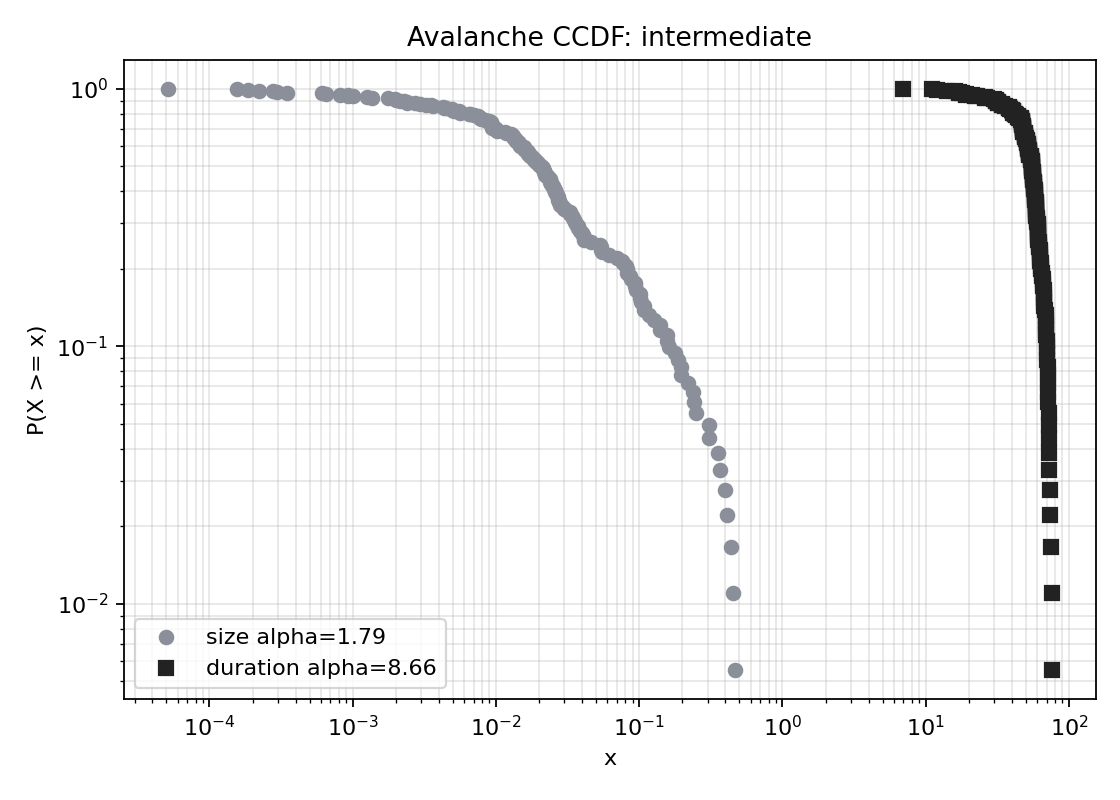
重力系では close encounter、slingshot、evaporation、escape、core collapse が直接 transport event になります。したがって avalanche の seed は finite-time Lyapunov burst だけでなく、energy jump、radial transport、angular-momentum exchange、escape event でも定義できます。
03 / Geometry
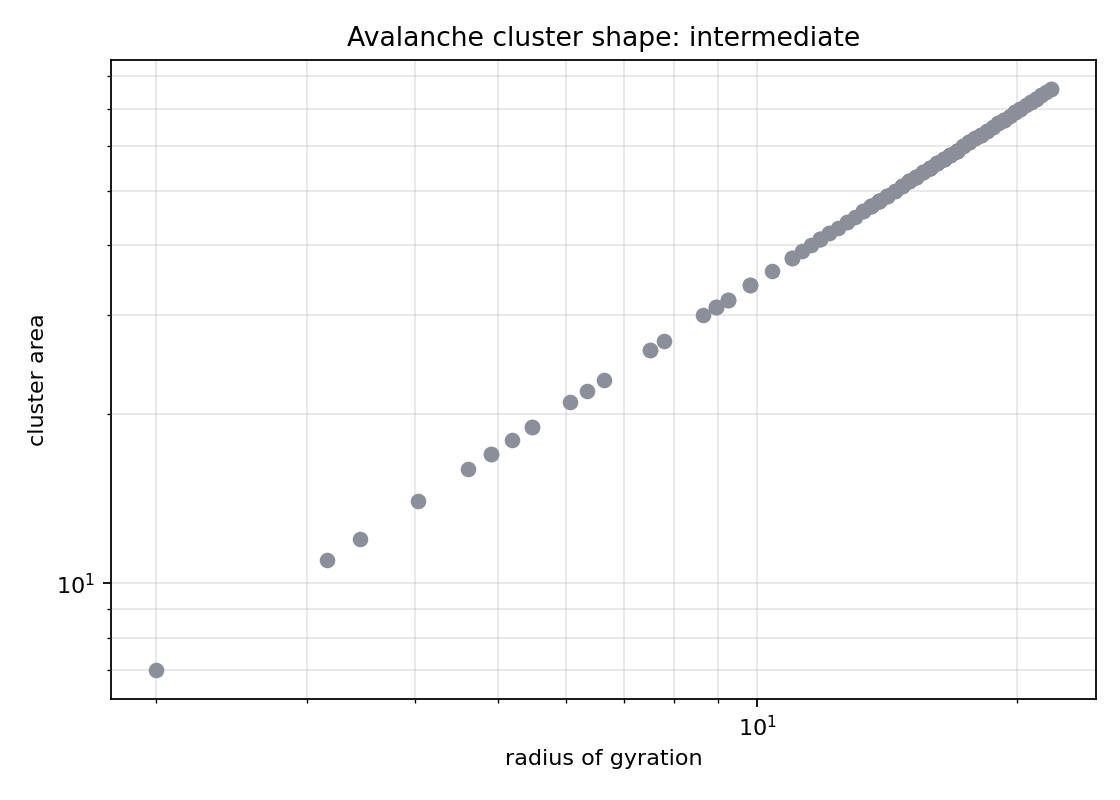
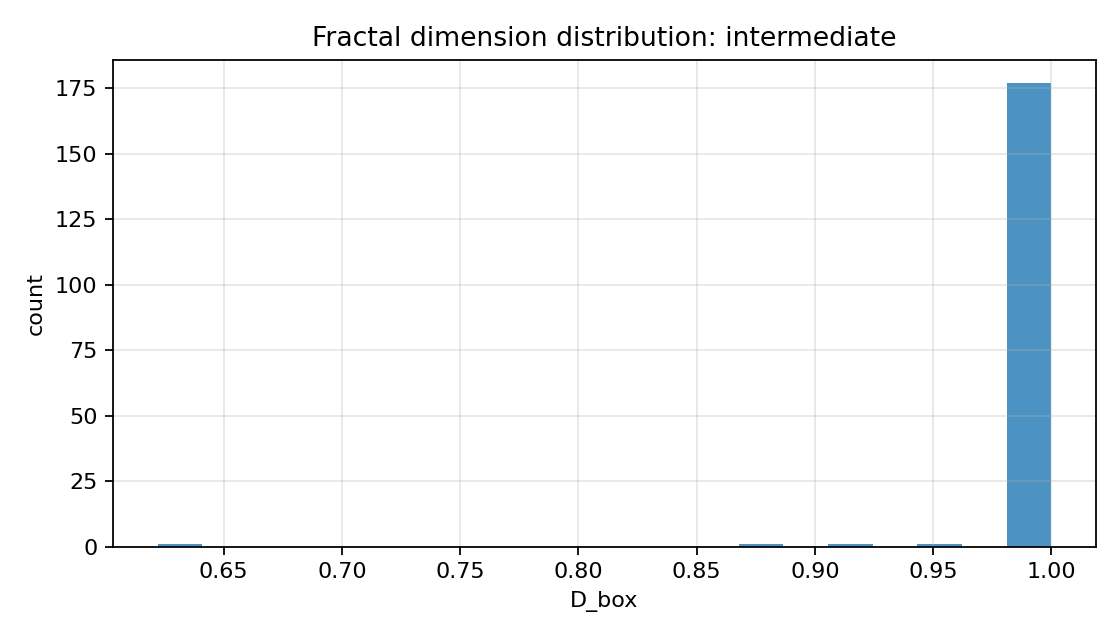
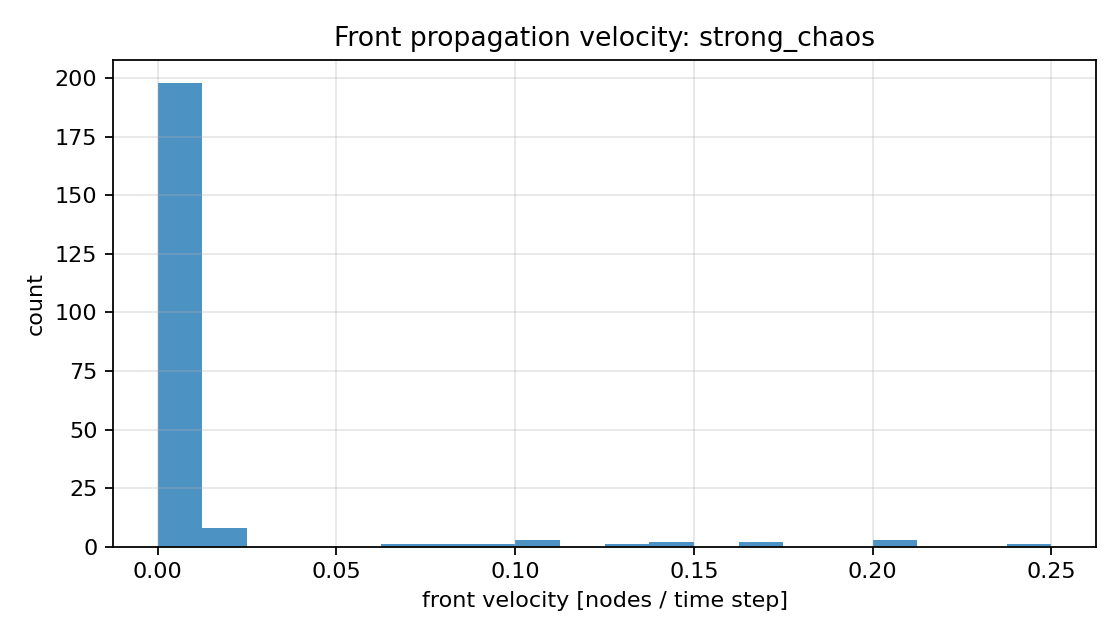
Dbox ≈ 1 や front velocity ≈ 0 は、むしろ重力系らしい
- filamentary avalanche は resonant escape corridor と読める
- Dbox ≈ 1 は compact blob でなく radial jet や corridor transport を示す
- front velocity ≈ 0 は nearest-neighbor 不在ではなく network-mediated coupling を示す
今回見えた filament geometry や zero-front-like redistribution は、local wave の不在というより global resonance coupling の表れとみなす方が自然です。
04 / Adaptive Network
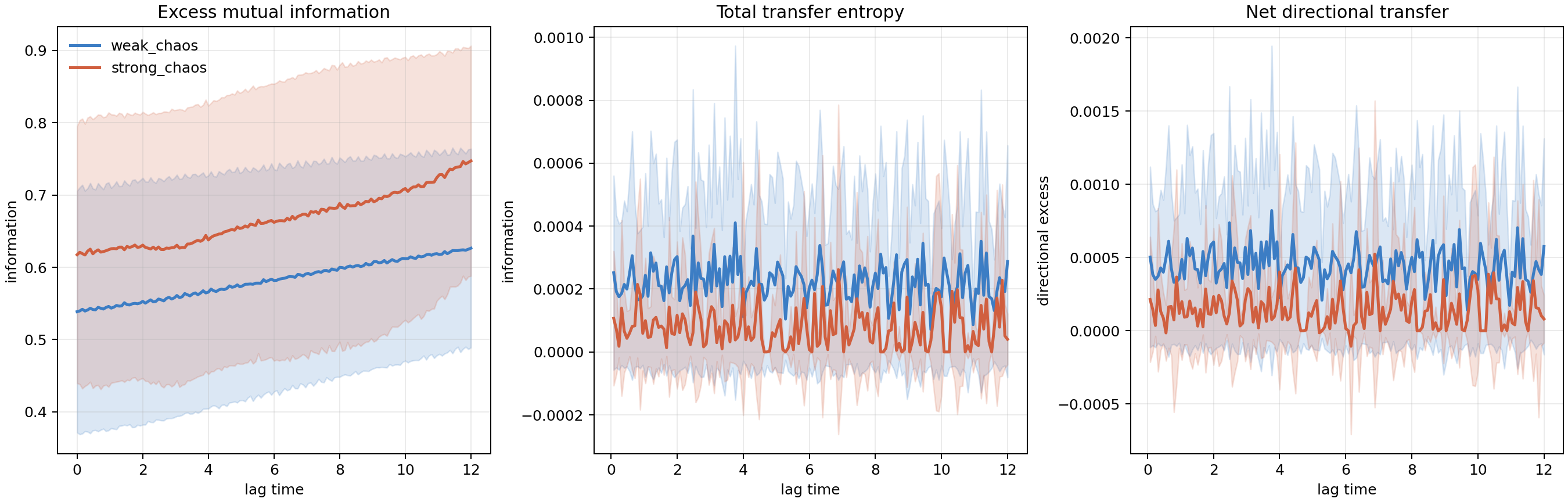
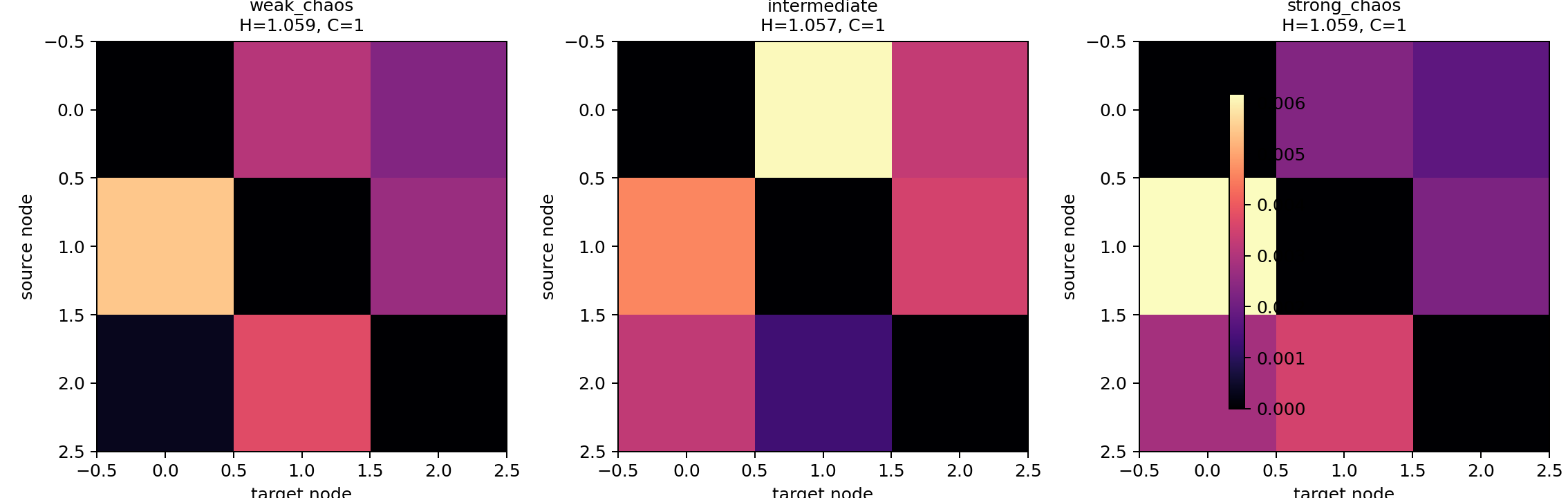
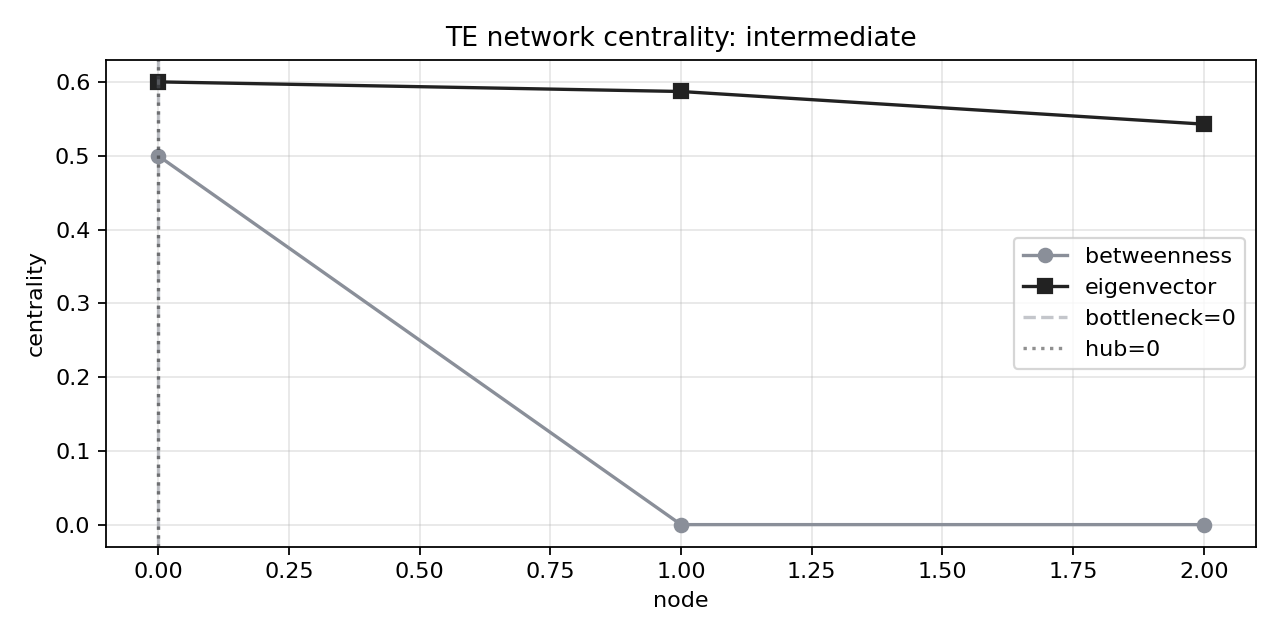
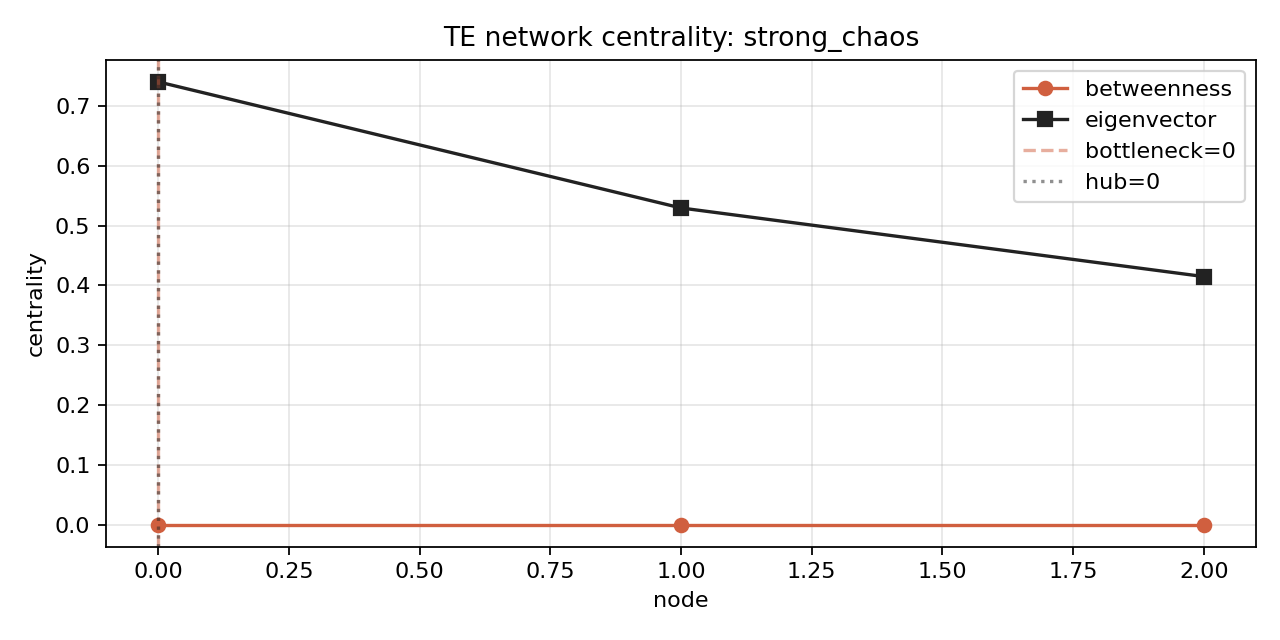
TE network は重力輸送の方が本質を捉えやすい
wij ∼ 1 / rijα
t < tevap, Nbound(t), fesc(t)
重力相互作用は nonlocal で dynamically rewiring されるため、固定格子 front より TE network の方が transport physics に近い記述になります。実装上は co-moving core frame、adaptive graph、interaction-weighted graph のいずれかで再定義するのが適切です。